"Powerball numbers" is one of the most searched lottery terms in the US, and it spikes every time the jackpot climbs. Many of those searches come from people trying to find an edge: which numbers come up most often, which are "due", and which patterns win.
The truth is simpler, and more useful. Here are seven common myths about Powerball numbers, why they don't hold up, and what the same randomness means for casino games like keno and slots.
How Powerball Numbers Are Drawn
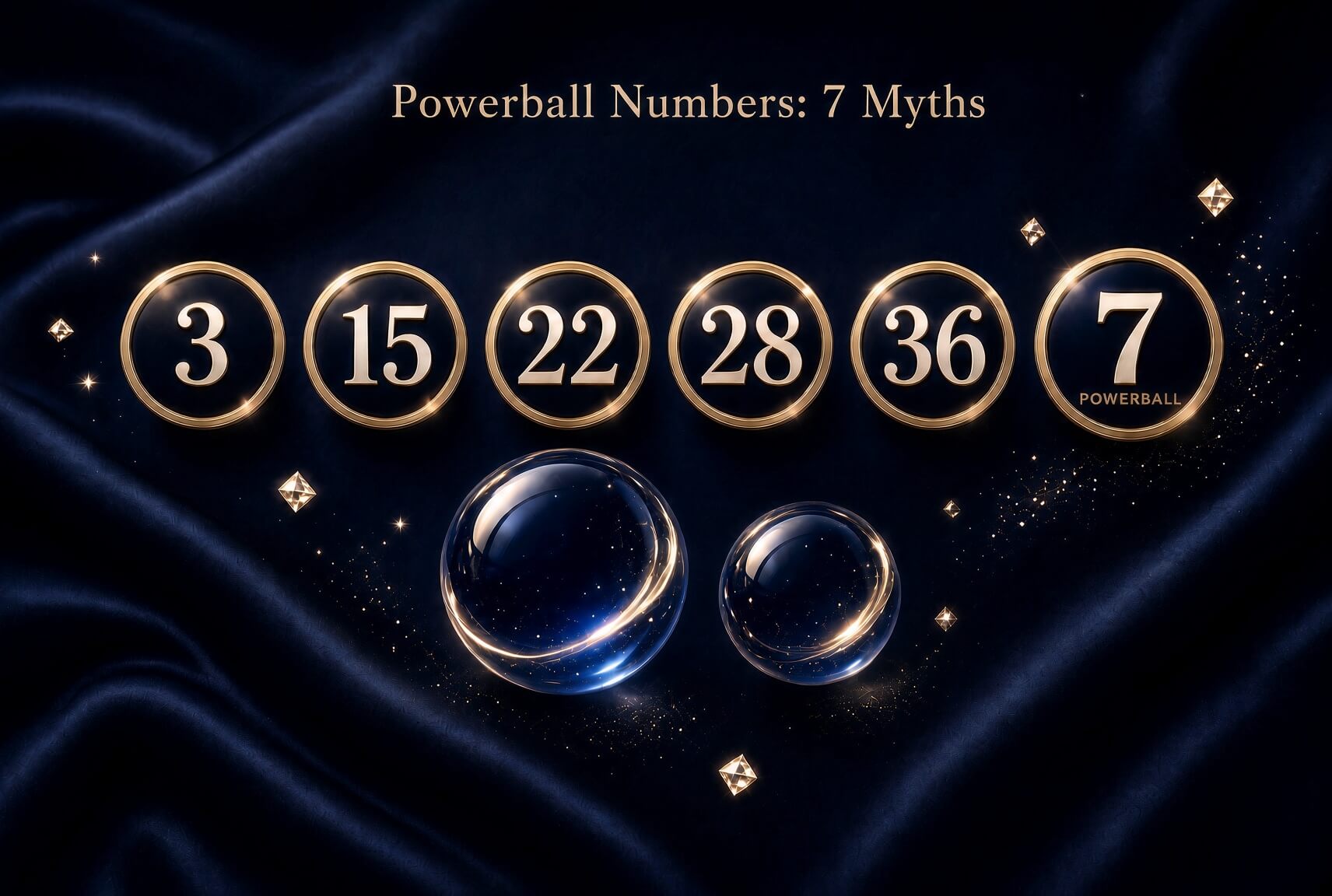
Each drawing picks 5 white balls from 1 to 69 and 1 red Powerball from 1 to 26. The draw uses physical ball machines and is independently audited. Every combination has exactly the same chance: 1 in 292,201,338 for the jackpot.
For a full breakdown, see Powerball odds explained.
Myth 1: "Hot" Numbers Are More Likely to Come Up
Lottery sites often list "hot" numbers, the ones drawn most often recently. But the balls don't remember previous draws. A number that came up three times last month has the same chance next time as any other.
Fact: Over a short period, some numbers will always appear more than others. That's just how randomness looks.
Myth 2: "Cold" Numbers Are Due
This is the flip side of Myth 1, and it's known as the gambler's fallacy: the belief that something is "due" because it hasn't happened in a while. Every draw is independent, so no number is ever due.
Fact: The same fallacy causes trouble in casinos, like expecting red after a run of black in roulette. We tested a "due" strategy in our Martingale simulation.
Myth 3: Patterns on the Ticket Make a Difference
Diagonal lines, shapes on the play slip, or numbers in a row (1, 2, 3, 4, 5) all have exactly the same odds as any other combination.
Fact: Unusual-looking combinations aren't less likely. They just feel less likely.
Myth 4: Birthdays Are Lucky
Birthdays and anniversaries are popular picks, but they don't change your odds.
Fact: Using dates can affect how much you'd win, though. Because dates only go up to 31, many people pick numbers in that range. If a jackpot hits on lots of low numbers, more people are likely to share it. Choosing some numbers above 31 doesn't improve your odds; it just makes a shared prize less likely if you do win.
Myth 5: Quick Pick Is Worse Than Choosing Your Own
Some players think computer-generated numbers are "less lucky".
Fact: Quick pick and hand-picked numbers have identical odds. Quick pick also avoids common human patterns like birthdays.
Myth 6: Buying Tickets at a "Lucky" Store Helps
Some shops advertise that they've sold big winners before.
Fact: Stores that sell more tickets sell more winners. The store has no effect on your numbers.
Myth 7: More Tickets Make Winning Likely
Buying more tickets does increase your chances. But with odds of 1 in 292 million, 10 tickets give you a 10 in 292 million chance. That's still extremely unlikely.
Fact: Spending more raises your cost much faster than it meaningfully raises your chances.
What This Means for Keno and Slots
The same rules of randomness apply to casino games:
| Myth | Lottery | Keno | Slots |
|---|---|---|---|
| Hot or cold numbers | No effect | No effect | No "hot" machines |
| Something is "due" | False | False | False |
| Quick pick vs your own | Same odds | Same odds | n/a |
- Keno works like a fast lottery: 20 numbers drawn from 80. Quick pick has the same odds as your own numbers. Read how to play keno online.
- Slots use a random number generator (RNG) for every spin. A slot that hasn't paid in a while isn't "due". Our slots tips explain how RNGs work.
Knowing this helps you play for the right reasons: fun and entertainment, with a set budget.
Diamond Reels is not affiliated with Powerball or the Multi-State Lottery Association.
FAQ
Are some Powerball numbers luckier than others?
No. Every number and every combination has exactly the same chance in each drawing.
What are the most common Powerball numbers?
Some numbers have been drawn more often than others over time, but that's normal randomness. It doesn't make them more likely to come up next time.
Is quick pick better than choosing my own numbers?
Both have identical odds. Quick pick simply avoids common patterns like birthdays.
Can you predict keno or slot results?
No. Keno draws and slot spins are random and independent, so past results don't predict future ones.
Play for Fun, Not for Patterns
Powerball numbers, keno draws and slot spins all share one truth: every result is random. Let go of hot numbers and lucky patterns, set a budget you're comfortable with, and enjoy the game for what it is.
Play responsibly. Diamond Reels is for players aged 21 and over. Gambling should be entertainment, not a way to make money. Set limits before you play, and if gambling stops being fun, call or text 1-800-GAMBLER (1-800-426-2537) for free, confidential support, or visit our Responsible Gaming page.