
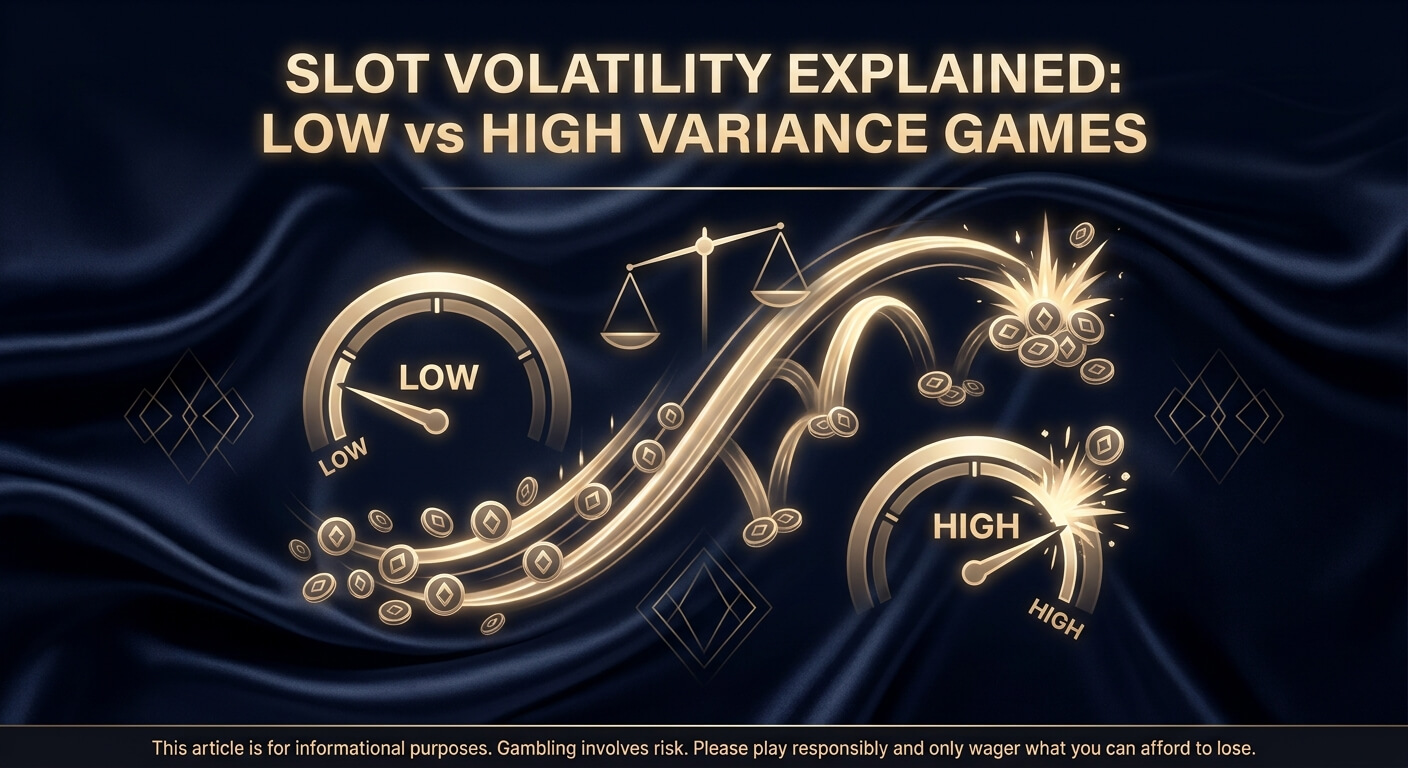
Slot Volatility Explained: Low vs High Variance Games
Two slots can share the same RTP and still feel completely different to play. One pays out small wins constantly and rarely runs your balance dry. The other stays quiet for long stretches, then delivers a payout big enough to make up for it. That difference comes down to volatility — sometimes called variance — and it's one of the most useful things to understand before picking a game.
What Volatility Actually Describes
Volatility measures the size and frequency of wins, not the overall payback percentage. RTP tells you what a game returns on average over the long run; volatility tells you how bumpy the ride is on the way there.
- Low volatility slots pay out more often, but the wins tend to be smaller relative to your bet.
- High volatility slots pay out less often, but the wins — especially through bonus features — can be considerably larger.
- Medium volatility slots sit somewhere between the two, balancing win frequency with payout size.
Two games can both carry a 96% RTP and behave in totally different ways session to session because of this.
Low Volatility: Steadier Sessions
Low volatility slots are built to keep your balance moving without huge dips. They suit players who:
- Want their bankroll to last longer per session
- Prefer frequent small wins over occasional big ones
- Are newer to slots and want a gentler introduction to how bonus rounds and paylines work
The tradeoff is that low volatility games rarely deliver the massive multipliers or jackpot-sized hits that high volatility titles are known for.
High Volatility: Bigger Swings, Bigger Ceiling
High volatility slots ask for more patience. Dry spells are normal, and your balance can dip noticeably before a feature hits. In exchange, the payout ceiling is much higher — bonus rounds and free spin features on high volatility games often carry multipliers that dwarf what a low volatility game can produce.
These games suit players who:
- Are comfortable with longer stretches between meaningful wins
- Play specifically for the chance at larger payouts
- Manage their bankroll with that swing in mind — setting a budget they're fully prepared to see run down before a feature lands, if it lands at all
How to Match Volatility to Your Bankroll
The practical rule of thumb: the higher the volatility, the more your bankroll needs to be able to absorb a losing streak before you see a return. If you're working with a smaller session budget, low-to-medium volatility games generally let you play longer and see more action. If you've set aside a budget specifically for a shot at a bigger multiplier and you're fine with it not landing, high volatility games are built for exactly that kind of play.
Neither approach is "better" — they're built for different kinds of sessions and different expectations. Knowing which one you're playing before you start is what actually matters.
Where to Check a Game's Volatility
Volatility isn't always labeled outright the way RTP is, but most game descriptions and info screens will mention it, or you can generally infer it from the feature set — games with big multiplier free spin rounds tend to run higher variance, while games with frequent small-line wins tend to run lower.
The Bottom Line
Volatility shapes what a session actually feels like far more than RTP does. Before you load up a new title, it's worth a quick check: are you looking for a steady, longer session, or are you playing for a shot at a bigger swing? Picking games that match your bankroll and your patience makes for a much better night than guessing.
Ready to test the difference? Explore both ends of the spectrum in the Diamond Reels game lobby and check each title's info screen before you play.
This article is for informational purposes. Gambling involves risk. Please play responsibly and only wager what you can afford to lose.